Track II
Daniela Contreras, Valentin Jadot
Weaves declassified CIA transcripts and opens a dialogue with an AI that embodies Kissinger — memory against forgetting, in Seattle.
Technical sheet
Brief
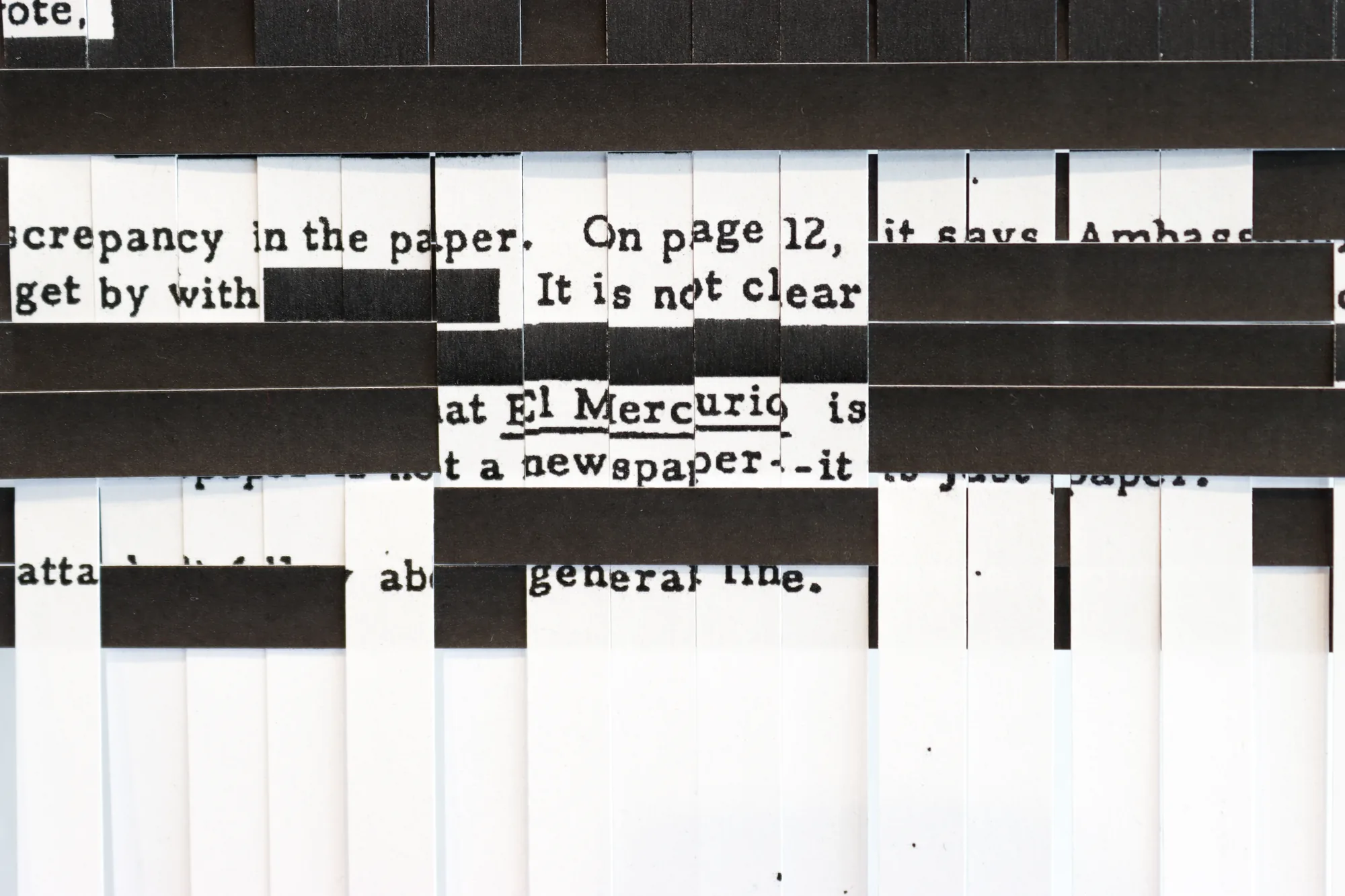
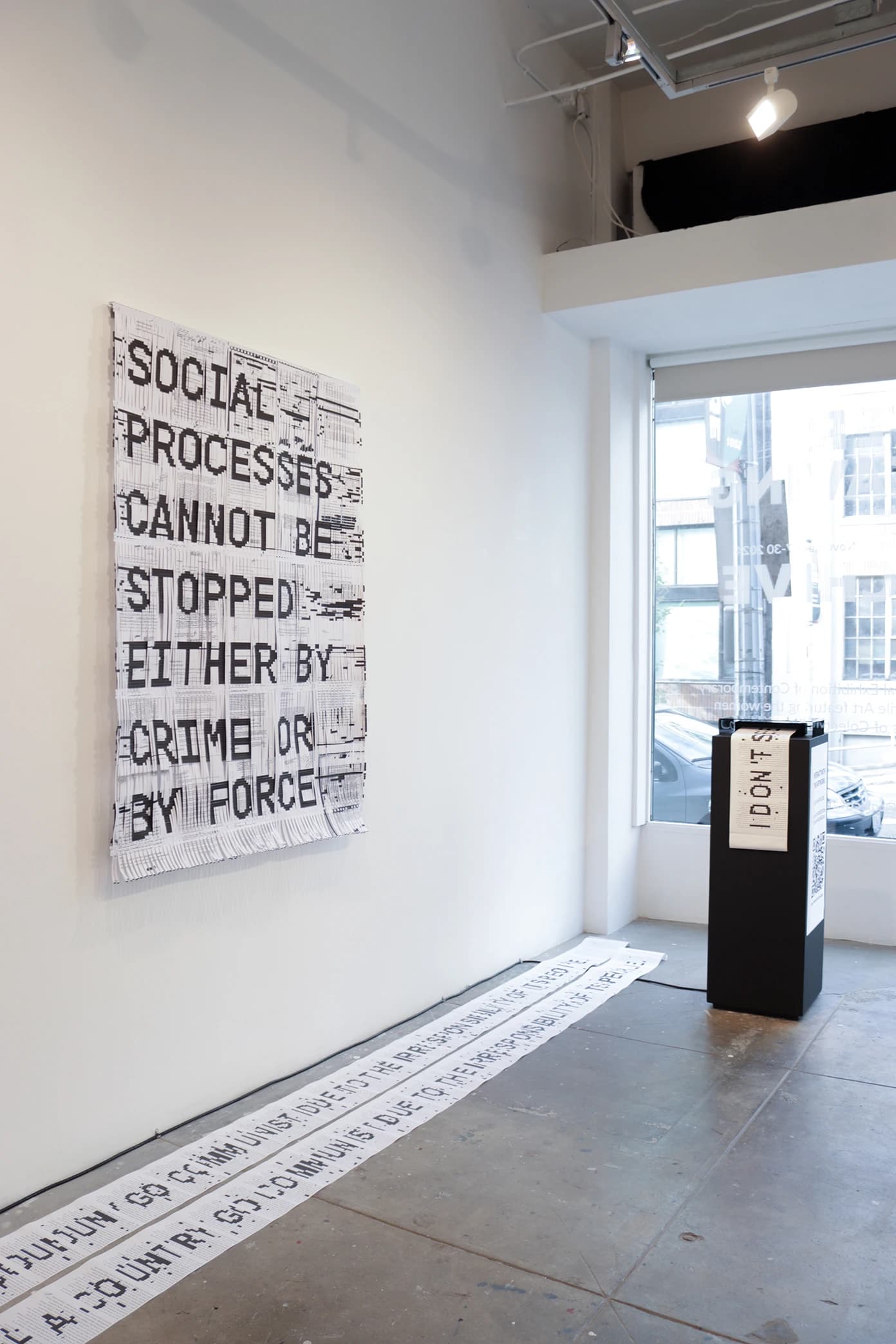
It weaves heavily redacted CIA transcripts and chains a public conversation with an artificial intelligence that embodies Henry Kissinger: archive, body, and room as a single memory apparatus.
Anchor the show with a site-specific piece where textile craft, declassified archive, and dedicated software turn censorship into something visible — and into a shared question.
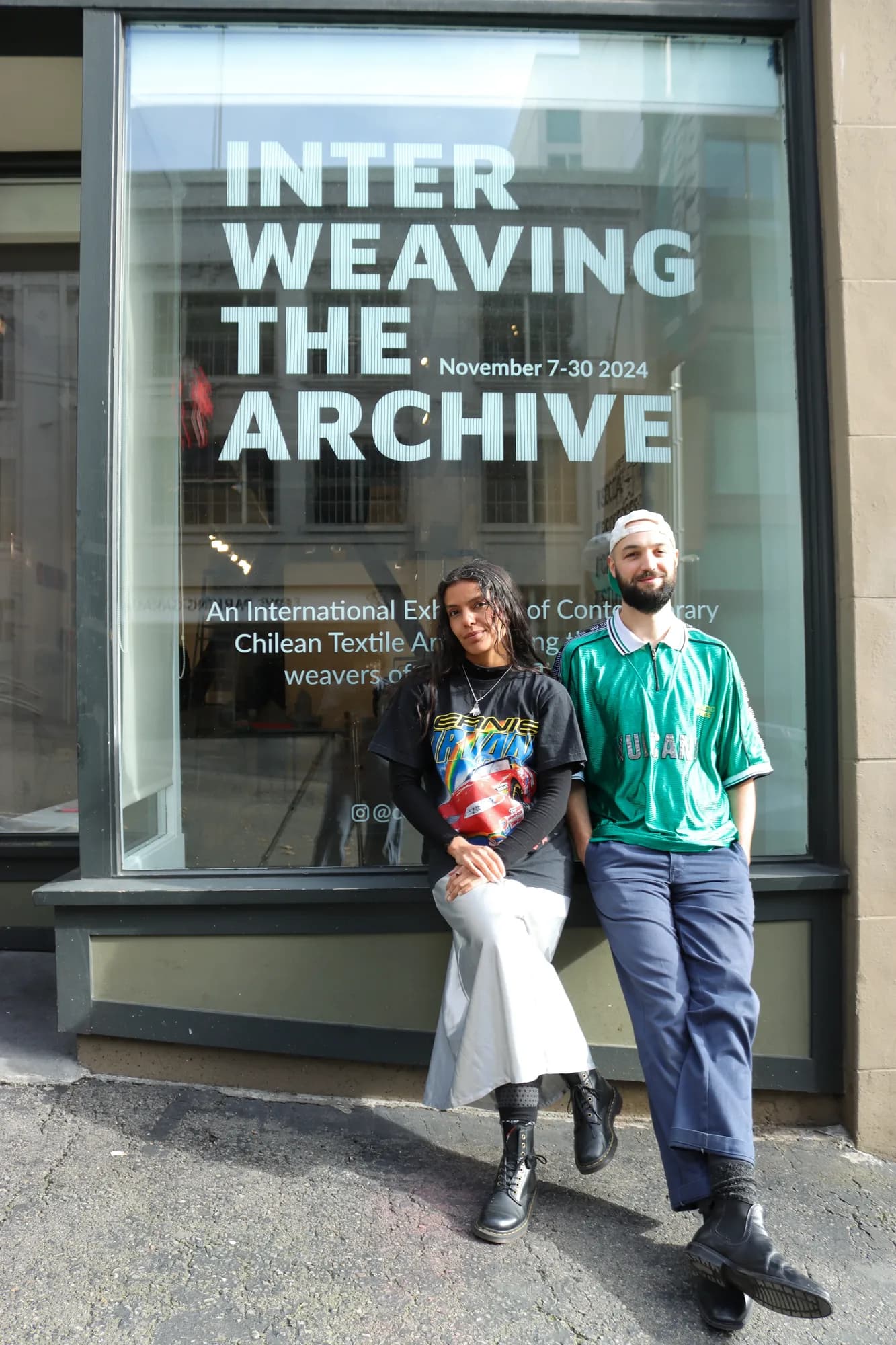
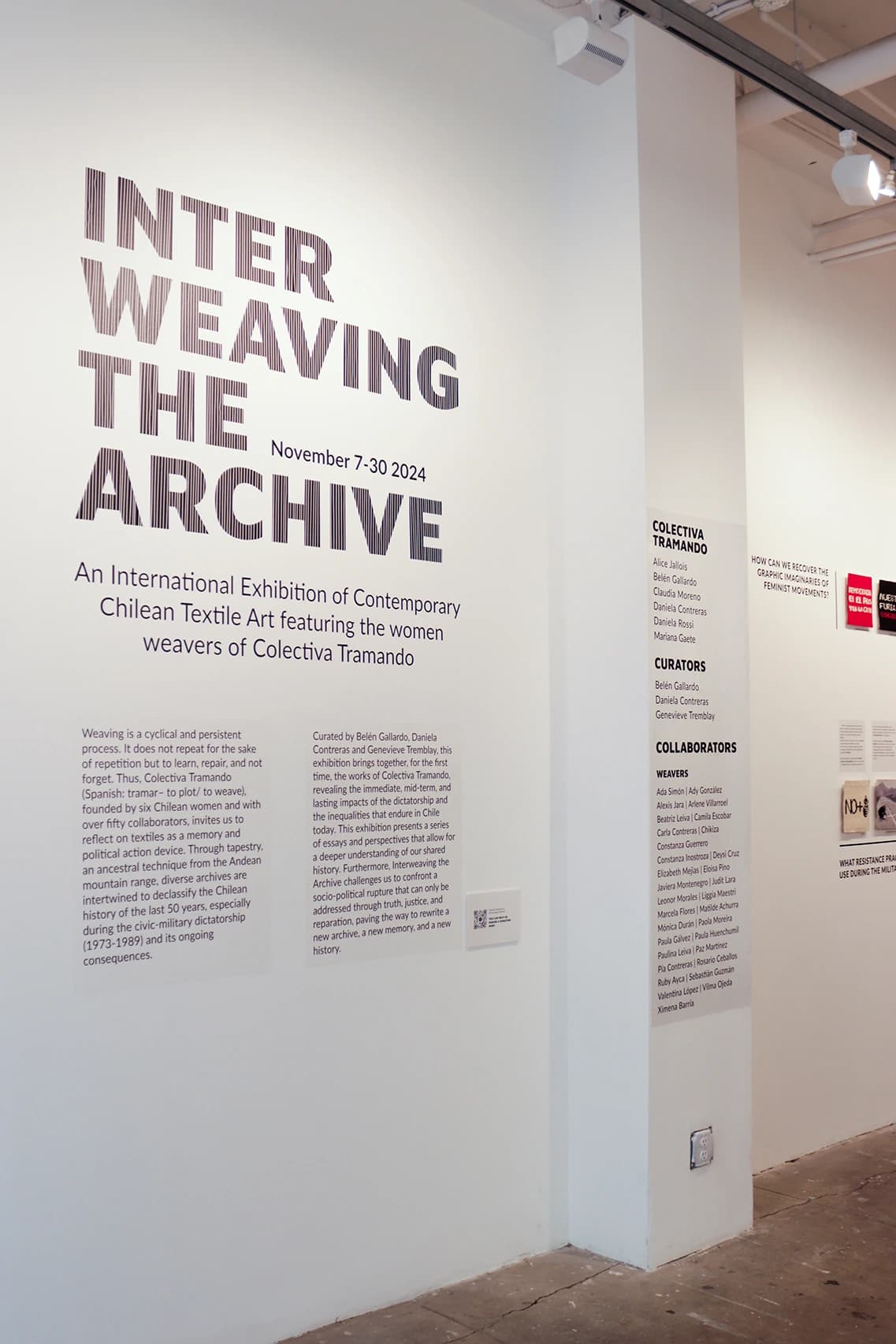
As part of Interweaving the Archive (SOIL Gallery, Seattle), the commission sought a work that would weave together historical research, political critique, and contemporary textile practice: returning to documents from the 1970s in which Kissinger played a central role in preparing the coup, and building a bridge between Andean craft, archive, and technology so audiences inhabit hidden narratives and reconsider how memory is made.
Intuitions
-
Despite thousands of declassified documents, the public story remains fragmented: the role of the U.S. and Kissinger is still thinly worked in common discourse — a History still in arrears.
-
There is a structural parallel between shredding and hand-weaving documents and fragmenting, indexing, and recomposing them with AI: two ways of working on remains to produce meaning and dispute who writes History.
Process
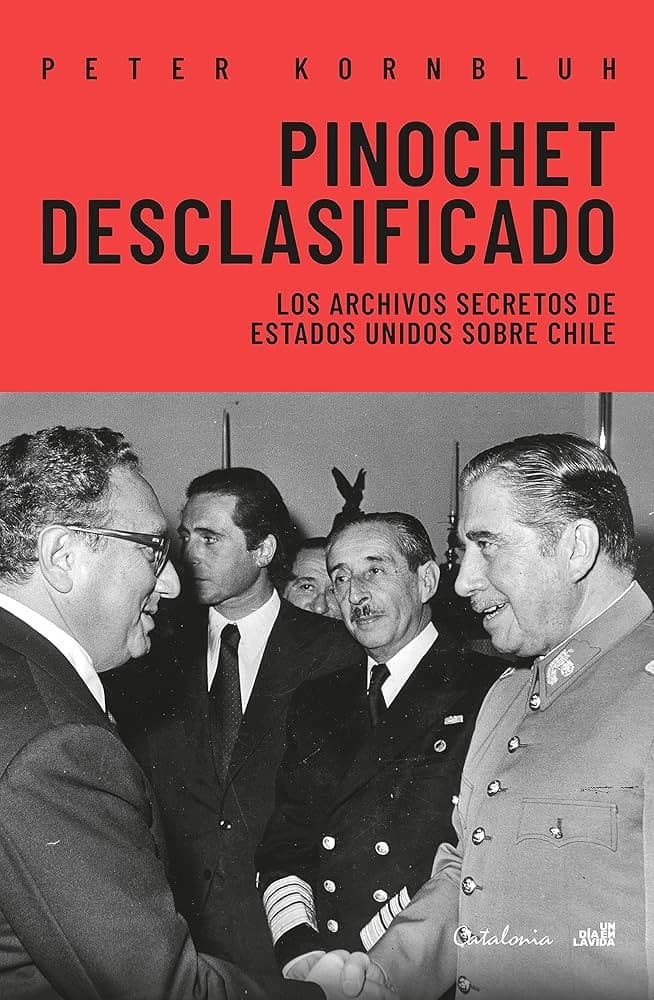
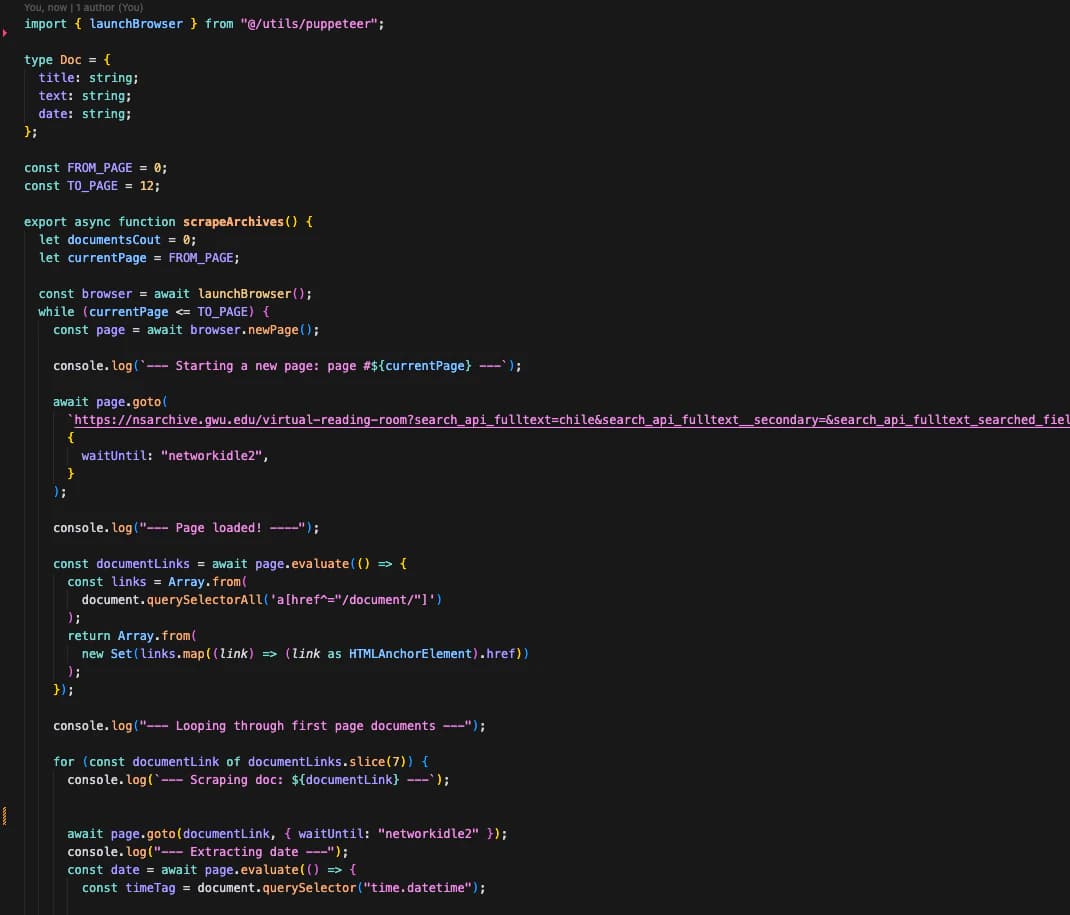
After reading The Pinochet File by Peter Kornbluh, the first step was writing code to download all declassified documents on Chile from the National Security Archive. A script that traverses the site, finds each PDF, and downloads it systematically.
With the documents in hand, the dual process begins.
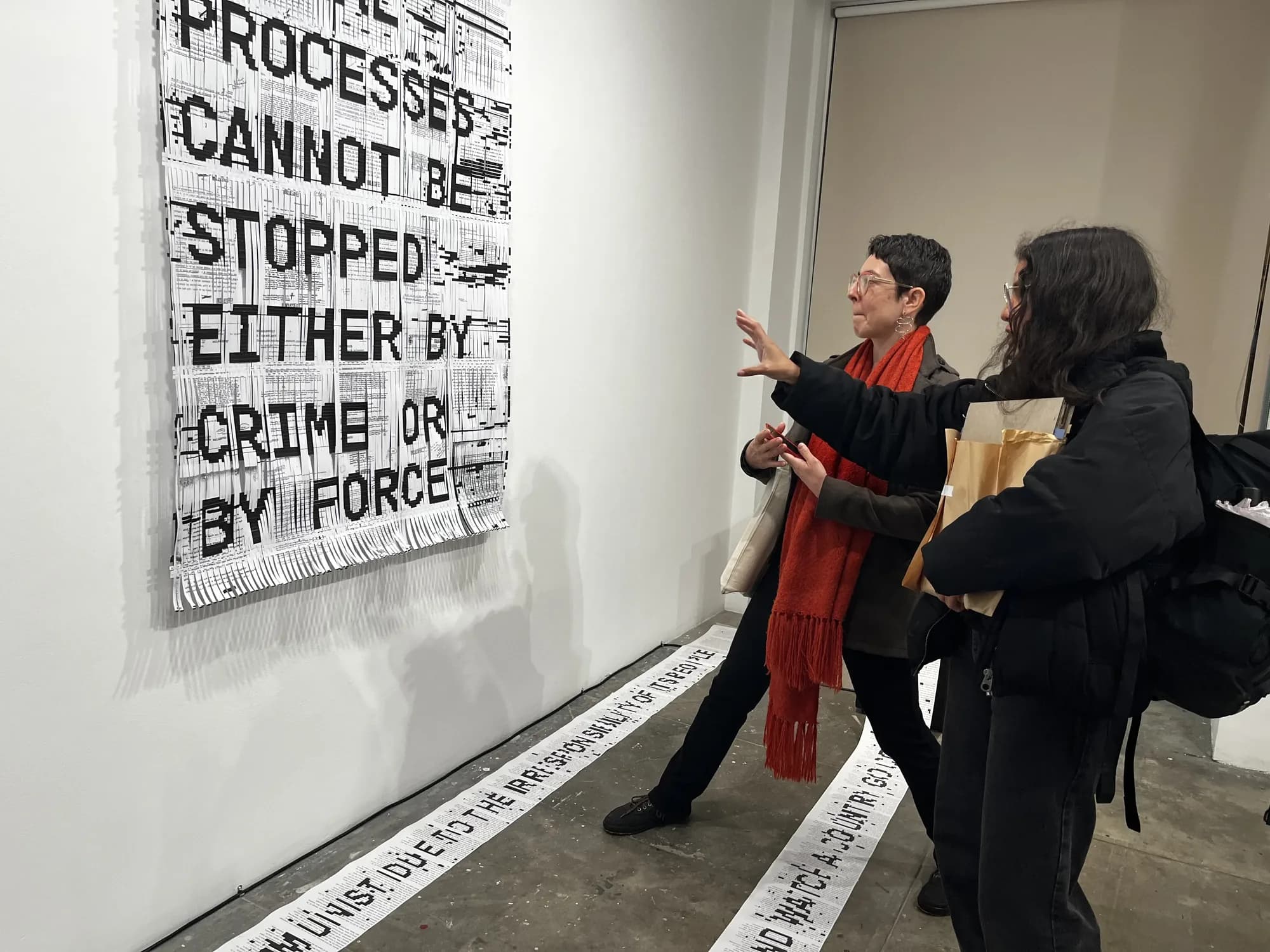
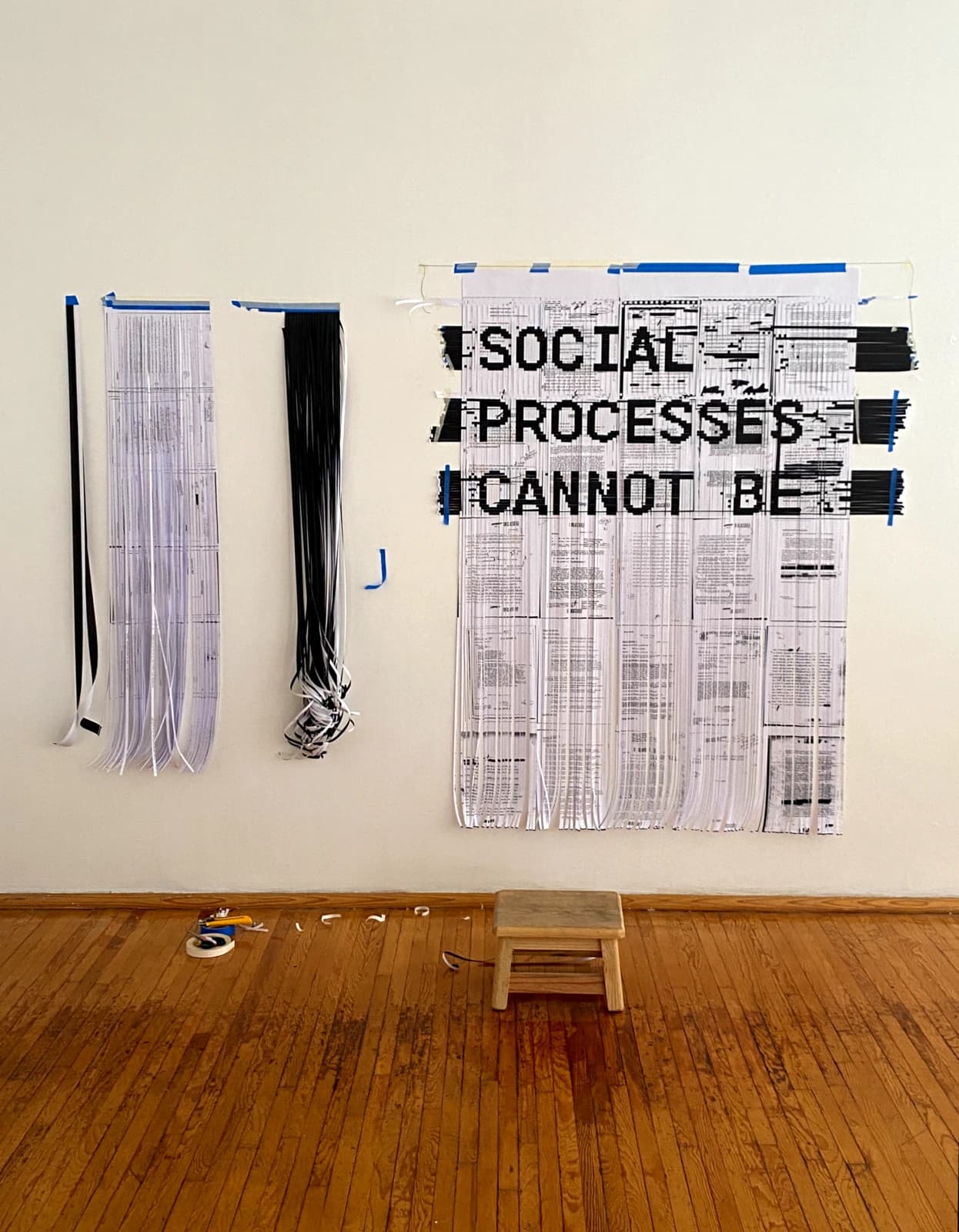
Daniela Contreras shreds the declassified files and rebuilds them with tapestry technique as a lost voice, inscribing a line from Salvador Allende’s last radio address minutes before his death in the bombing of La Moneda, September 11, 1973: “social progress cannot be stopped by crime or by force”.
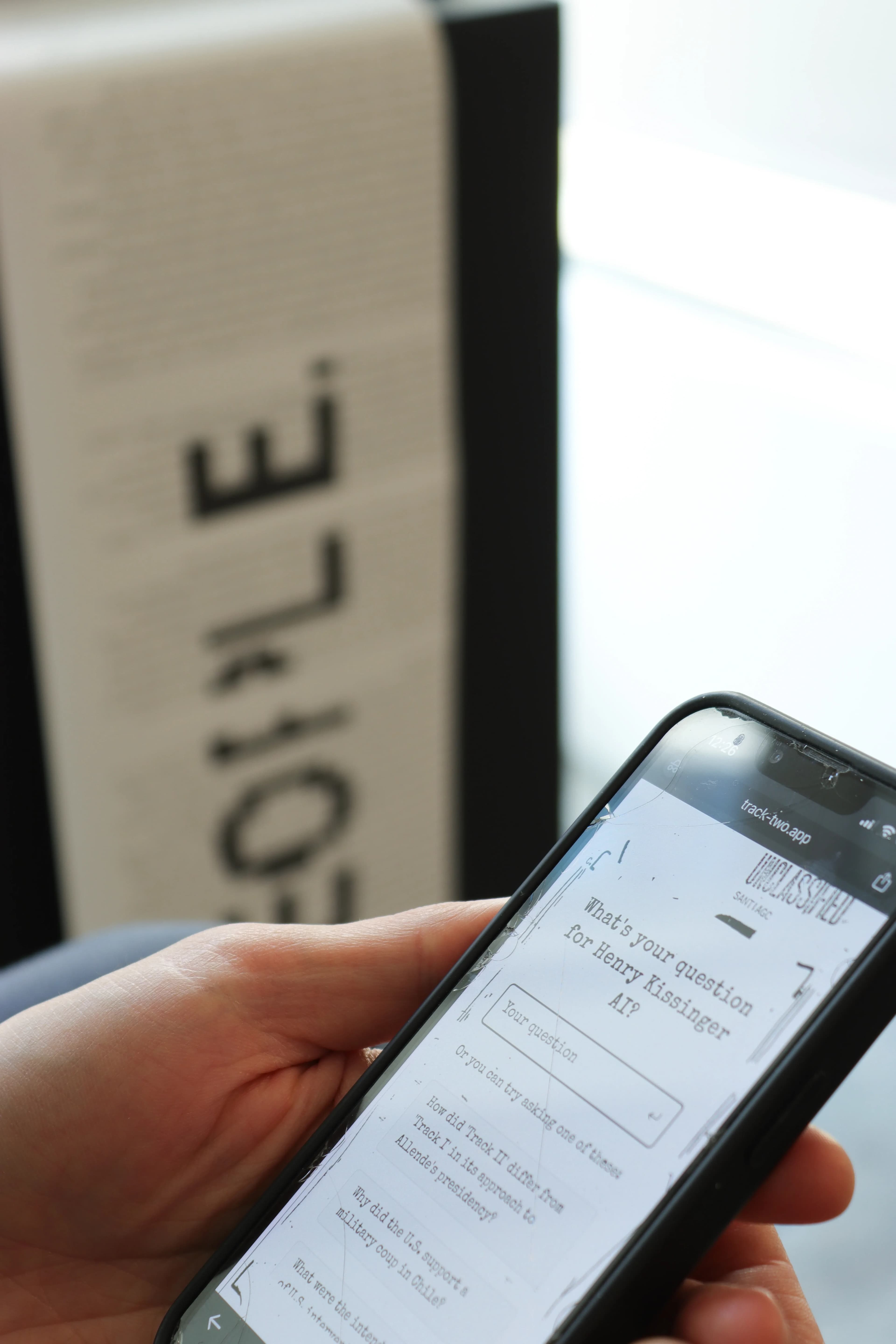
Valentin Jadot fragments those same documents into chunks stored in a “vector” database, placing each piece in an abstract 1056-dimensional space, ordered semantically, then training an artificial intelligence that, through a dedicated app, has Henry Kissinger speak about the murder of a democracy.
track-two.app: visitors dialogue with an AI that impersonates Henry Kissinger, opening an impossible conversation between his voice, the declassified documents, and a still-open wound.
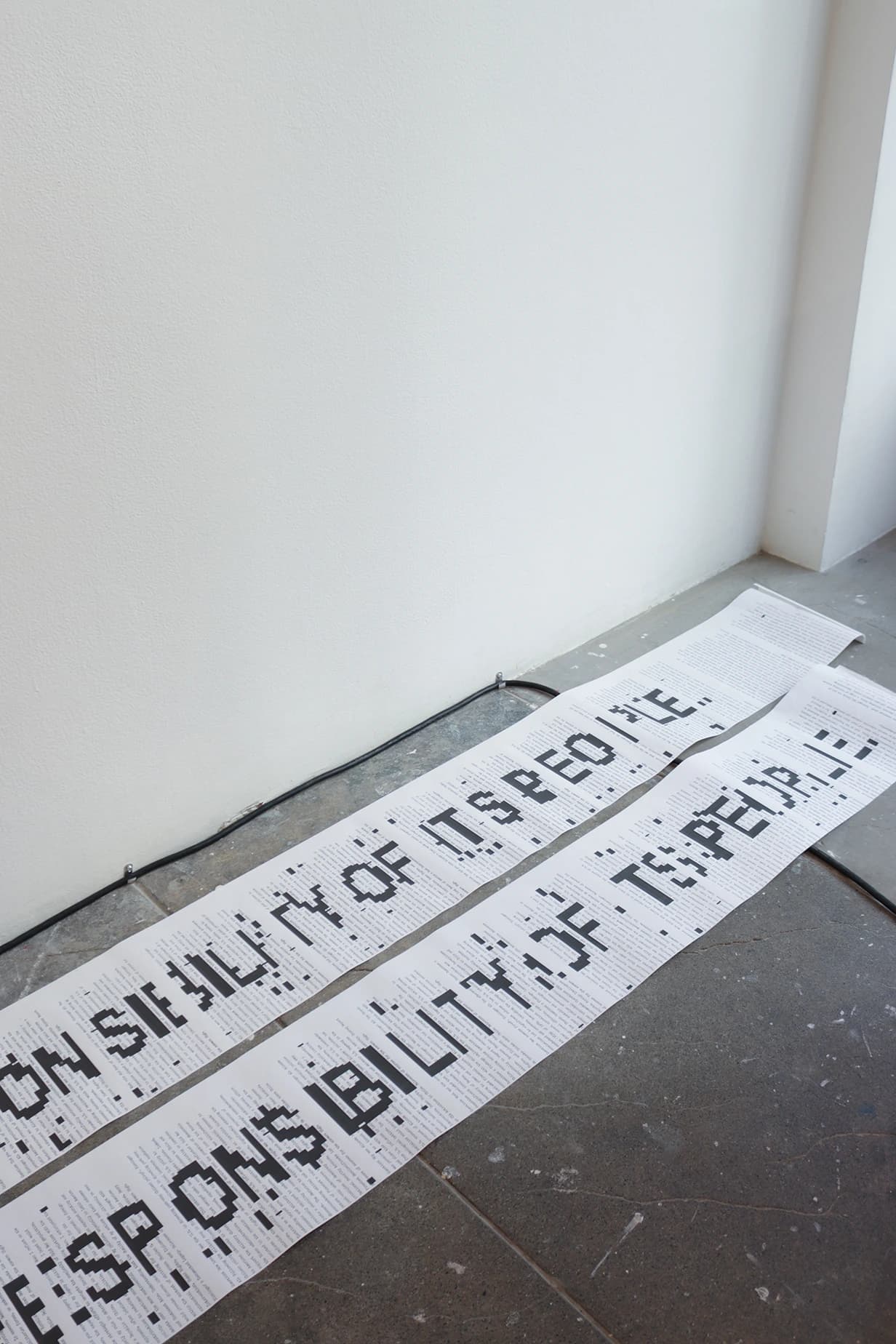
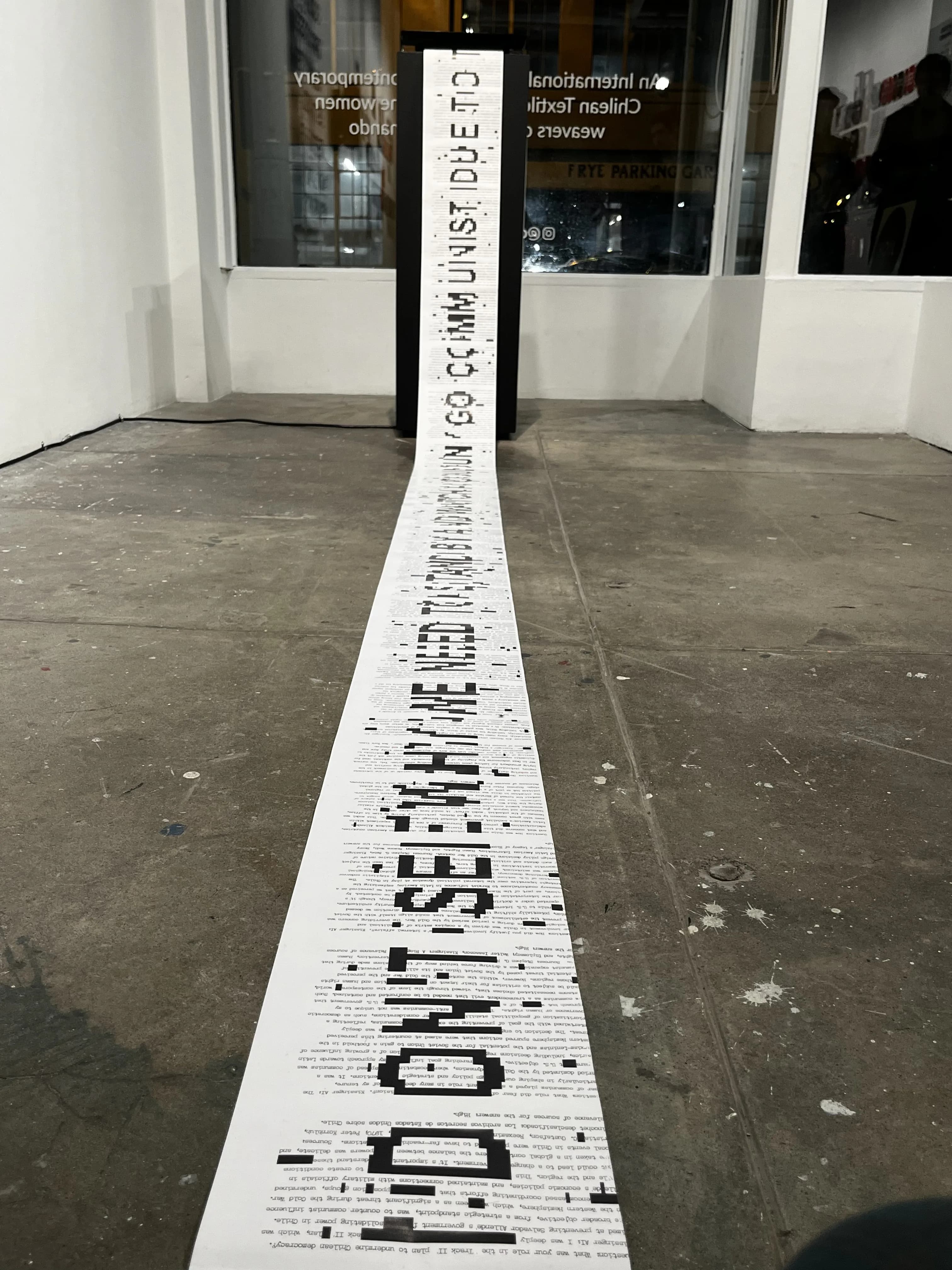
Print: meanwhile, conversations print on a roll of thermal paper. An algorithm strikes through the content. After several hours, along the paper roll, a Kissinger line from 1970 emerges: “I don’t see why we should stand by and let a country go communist due to the irresponsibility of its own people.”
Result
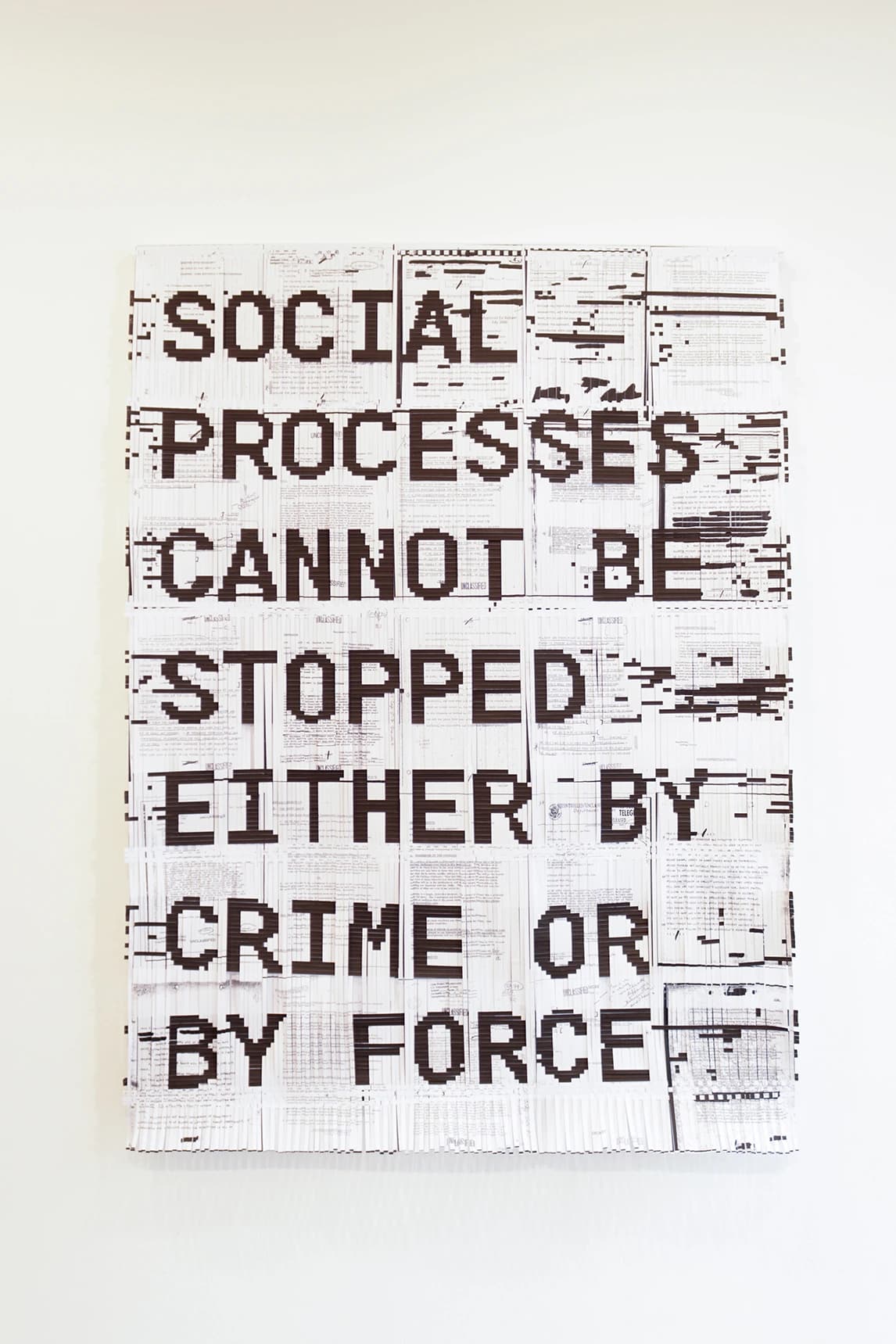
The piece premiered at SOIL Gallery within Interweaving the Archive, with support from FONDART (Chile). The curators presented the project at the international public history edition of the NCPH Annual Meeting (March 2025, Montréal), extending the conversation on interdisciplinary art, craft, political history, and collective memory.